FIRST CHANGES

Set shortly before the events in Above Ground. A little insight into the life of a werehorse.


He never noticed the dirt caked under his nails, the streaks of black dust on his arms and legs and no doubt on his face as well, until he stood at the front door of their cottage and reached for the handle.

Each day he’d pause, hand outstretched, and smile ruefully. There was something about the gleaming polish of their wooden door that made him realise how dirty he was. But it was to be expected: being as a blacksmith was hardly tidy work.

Thor pushed the door open and kicked off his black boots to avoid trekking mud into the corridor. His shoes hit the ground heavily, loud enough to wake the entire household. It was just as well they were already awake, and—judging by the giggling—in high spirits.

The sound made him feel guilty. Perhaps his news could wait.

He followed the noise to the kitchen, and paused by the doorway. Addy was cooking, hair tied up to expose her neck. Rose was in her high chair. She kept banging her spoon against her plate, and then laughing at the sound.

Addy noticed his not-so-subtle approach and waved a wooden spoon threateningly. “Hands!”

“I love you, too.” He grinned and scrubbed his hands clean in the kitchen sink, splashing his face for good measure. Then he planted a kiss on Addy’s cheek, sprinkling her with water. He ducked out of the reach of her spoon just in time.

Addy shook her head. “How was work?”

“Okay.”

Rose gurgled happily as he sat at the table, waving her plastic fork. Her chestnut curls bounced like little springs.

“Only okay?”

“A townie came by. Thought it’d be funny to ask me to shoe his horse with silver horseshoes.” Then Thor smirked. “He stopped laughing when I told him the price.”

“You didn’t do it though, did you?”

“He couldn’t afford it.” He saw the disapproval on Addy’s face and hastened to add, “I’d have worn gloves. The poison doesn’t carry through them.”

“I’d prefer it if you didn’t take the risk, honey.”

“I know,” he said soothingly. Him and Addy never met hoof to hoof on this; she didn’t understand that horse-owning humans saw werehorses more as oddities than as people. Which reminded him. . . . But not now. He’d tell her later.

Addy brought over two plates of vegetable stew, setting one down in front of him. She took Rose’s plate and added a small amount of vegetables as well, checking to make sure the food was cool.

Rose dug into the plate happily enough. Most of her food ended up on the table. When a spoonful actually made it to her mouth, Rose sucked on the plastic with stubborn determination.

Thor took his daughter’s cue and dug into his own plate, shovelling down the contents at a pace just slow enough to still be considered polite.

“Like father, like daughter,” Addy muttered with a smile.

They’d just about finished dinner when it happened.

Rose’s face screwed up in abrupt confusion. Then she sneezed all over her own plate. When she looked up, her ears were no longer round or even human; they poked out of the sides of her head, two foal ears, pricked to attention.

Addy clapped her hands together. “Her first change!” She rubbed the tips of Rose’s ears affectionately, reciting the popular rhyme: “First the ears means many years.”

Thor smiled. “Looks like she takes after me in colouring, too.”

“Yes, she’s a real daddy’s girl,” Addy remarked wryly, clearing the plates. She winked at Rose. “Your daddy is going to spoil you rotten, I can tell already.”

Heck, he’d be spoiling Rose even now if they had the money for it. He watched Addy put the dishes in the sink and his smile slipped. Now. He had to tell her now.

“Angus was in touch.” Thor forced his voice to stay light.

Addy froze, her shoulders tense. “What did he want?”

“The usual.”

She turned, then, wiping her hands on her apron. “What about the dressing rooms?”

“He . . . he can’t do anything about it. There’s only enough space for one room per act; you know how popular the theatre is.”

Addy’s frown deepened. She grabbed a cloth and moved towards him. “I don’t like it,” she said, wiping down the table. “They’re asking for trouble, rooming you with a bunch of predators.”

“I’m not saying I like it, either, love. But it’s good money.” And then, in an attempt to reassure her, Thor lied: “He’s offered me a pay rise.”

She straightened slowly, glanced at Rose. “Really?”

They needed the money, even Addy knew that. There were no werekin schools nearby, and the humans would need bribing to accept Rose into their ranks. Then they’d have to pay for uniforms, which Rose would quickly outgrow or rip to shreds as she began learning to change.

Thor pushed away the guilt. It was only a white lie, after all; he would be getting extra money, just not from Angus. All he had to do was make sure everything in the theatre went as planned. He wrapped an arm around Addy’s waist. “It’ll be fine, trust me.”

Addy didn’t look convinced. “If you say so.”

Rose, oblivious to the conversation, interrupted them with a loud yawn. Her ears had changed back to human without their noticing. No wonder she looked exhausted; the first few changes always took their toll. Addy moved towards Rose, but Thor stopped her, grateful for the interruption.

“I’ll put her down for the night.” He placed a gentle kiss on Addy’s forehead, then plucked Rose out of the high chair. He cradled her to his chest as he walked out of the kitchen, smiling at his daughter.

As Thor walked up the narrow stairs to the second floor, he couldn’t quite rid himself of the guilt. But they needed the money. He would have to go to The Affected Parade.

Previous || Next
qazybanner

WOLF ON DEMAND

“Are you sure it’s safe?” The old woman pushed her glasses further up her nose and peered at the screen, her face so close to the monitor that Mark was afraid she’d leave smears across the glass.

“Sure,” he replied with a too-wide salesman smile. “It’s the latest technology. Everyone’s using it.” He eased the mouse out of the old woman’s hand, clicked back through the demo screens. “See? Every book you could want, ready to print on demand. It’s instant.” He clicked print. The machine started churning.

Instant Book Machine, it was called. An ugly black box no larger than a coffee maker, it perched on the edge of the old lady’s desk like a futuristic insect. One minute and forty-two seconds later, a book popped out of the side. Little Red Riding Hood. He handed it to the old woman.

“I don’t like instant coffee,” the old woman said tremulously, “and I like going to the bookshop, you know.”

He did know, but he wouldn’t get his weekly commission until the old biddy joined the twenty-second century. He was a salesman, sent forth like a wolf among lambs, determined to take them all.

“You can print birthday cards, Christmas cards. Whatever you want without leaving the house. And it’s cheaper than in the bookshops because you’re cutting out the middle men. No more pulping books, wasting trees; no more authors getting ripped off… Everything you’d need, on demand. ”

When she didn’t look convinced, he pulled out the big guns. “Your family don’t visit much, do they? You get one of these, guaranteed your grandkids will come visiting.”

She hesitated. “What’s it called again?”

“Instant Book Machine,” he said. His smile was sharp. The end was close. “And it’s print on demand.”

via Bubbels on stock.xchng

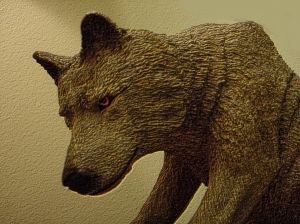
“I see, I see,” the grandmother said, voice quavering. “But can it wolf on demand?”

Mark frowned. “Excuse me?”

“Wolf on demand,” she repeated. “Like so.”

And then the old woman turned into a wolf and ate him.

A DEAL’S A DEAL

A glimpse into the world of the ewtes, an aquatic race of infected… Plus a little background on Sla’ik and the Snake.


Some suicides were never recorded.

Attempted suicides, however, were an entirely different matter. Three pairs of hungry eyes watched Sla’ik tie a rope around his waist, webbed hands struggling with the knot. He checked the rope was secure, then coiled the loose end around his arm, the sodden fibres scratching against his scales.

Up above, the shoreline was quiet, secure. No witnesses.

Perfect.

Sla’ik curled his tail beneath him, then paused, smiling—closed lips, ‘course. His companions were ewtes like him, money-hungry and crafty. One of them, Sy’nop, was twitching his tail back and forth, keen.

Sy’nop smirked. “Not skipping out, are ya?”

“‘Course not.” Sla’ik lifted the rope as evidence. “A deal’s a deal.”

Li’sso nodded, but Ri’ka looked nervous, her pale brown scales dull, shoulders hunched. She was half-turned away, head tilted as she weighed up the odds.

Her hunched posture only highlighted the curve of her spine, the two dark lines on either side. Sla’ik eyed her back appreciatively, then hid a scowl when he realised the other two ewtes were ogling too. Li’sso seemed particularly enthralled—then again, his spots were coming out, his stomach faintly patterned. Mating season was close for him. Boy was he going to get a shock when the females here didn’t respond like he was used to back home.

“Ri’ka,” Sy’nop said. “You in or out?”

Sla’ik made small ripples in the water with the rope. “I’m ready here.”

She turned, reluctant. Her gills fluttered out of excitement—or nerves. “I’m in.”

Money won out. It always won out.

Sy’nop swam closer. “No way are you gonna last even five minutes out there.”

And maybe he would have been right, had Sla’ik not secretly been practising for days.

“I’m in, too!” Li’sso nodded enthusiastically, then winked at Sla’ik when no one was looking.

It was a shame that Ri’ka was friends with Sy’nop, or he would have roped her into the plan instead. Li’sso was untrustworthy even in ewte terms, mountain-bred and soft. But few would suspect collaboration with an outsider, and Li’sso was—quite definitely—an outsider.

Sla’ik nodded, said, “Right,” to make himself look nervous. Handed the end of the rope to Ri’ka in a casual move that fooled no one. Syn’op’s scowl, if anything, showed that the symbolism of the gesture hadn’t gone unnoticed.

Time to make some money. Sla’ik swam up to the shore, stopped just beneath the waterline. He could feel the ripples of the waves, see the sun lance through the water. Sla’ik inhaled deeply, then released the water through his gills, pushing and pushing until there was nothing inside.

One tail flick and he was above the waterline. There was no shore here, only a steep bank, rising sharply into the sky. Sla’ik scrambled up the dirt wall, pulled himself onto the grass, mouth partially open. Shallow breaths. The dry air was bitter and sharp.

Careful, now. Couldn’t let his mouth dry out completely.

He stood, claws digging awkwardly into the sandy soil. When he looked back down into the water he could see three blurry shapes far below. Sy’nop was the most recognisable, his stomach a bright yellow.

Sla’ik tugged the rope twice to let them know he was up. Then he walked further away from the water, holding the rope so it did not snag. He sat by a large rock, settled down to wait. Shallow breaths.

The sun beat down mercilessly here, without the balm of water to protect. His scales were drying, itching, but that didn’t matter. It was his gills that Sla’ik was worried about, his gills and his throat. The flaps of skin on his neck fluttered weakly in the air, all but ineffectual.

Once, Sla’ik knew, the ewtes had been creatures of both water and land. Upon maturity, ewtes would leave the pool to forage in the trees, slipping between habitats like a snake changed its skin. Only the very young and very old would remain in the water, sheltered from danger.

Somehow over the years, ewtes had involved. Their lungs shrivelled, then failed. What little oxygen they could draw from the air was pulled through the lining of their throat . . . and only if the lining stayed moist.

When Sla’ik felt his mouth begin to dry, he reached behind the rock, one eye on the shoreline in case any of the ewtes got it into their heads to check up on him.

His hand met air.

He patted the area more thoroughly. Nothing.

Sla’ik dropped all pretence of casualness. They were gone. The stockpile of water he’d left behind the rock a few hours earlier was gone.

Had Sy’nop guessed? Had Li’sso betrayed him? Or had some land walker come across the stockpile and claimed it? Sla’ik felt his chest tighten, his breathing quicken. He couldn’t afford to lose the bet, was in enough debt as it was.

“Looking for something?”

Sla’ik turned his head slowly. Standing behind him was the Snake.

His stomach dropped, he shielded his eyes briefly out of respect. “No, no, I’m not,” he replied, barely moving his lips. Keeping his hand concealed, he tugged on the rope twice. Pull me down, he begged, but nothing happened.

Sla’ik crawled backwards on his hands and knees, edging towards the waterline. The Snake just watched, head cocked to one side. Amused.

Too late Sla’ik realised he’d been breathing deeply, mouth wide open. His throat was almost dry, the ground swam before him as the dizziness set in. Sla’ik tugged on the rope again, harder, panicked.

There! They were pulling! Inch by inch he was dragged closer to the shore. He dug his claws into the ground, pushing himself along as best he could, but his limbs were heavy and the soil slipped beneath his feet.

Then the rope around his waist came undone. He felt it release its hold, whip past him into the water.

The water was so close. Just his mouth. That’s all he needed. He pushed with his toes, with his chin, barely moving more than an inch. The edges of his vision were blackening now, and Sla’ik thought: this is it. At least he wouldn’t have to pay off his debts.

But the Snake had other plans. He grabbed Sla’ik by the ankle, pulled him close, away from the water. Sla’ik struggled, yelped, his voice cracked and strangled. The Snake was too strong. He pried Sla’ik’s mouth open and shoved something inside—a tube of some sort.

Sla’ik gasped, something hit the back of his throat, and he swallowed.

The rush of oxygen was an instant high. Sla’ik stilled, felt the water dribble out of his gills and down his neck. He sucked on the tube again.

Water. Fresh water.

His mouth regained sensation, his head stopped spinning. When the Snake let him go, Sla’ik sat up slowly. The tube in his mouth was attached to a metal container.

The Snake stood over him. “I saved your life.”

Business instincts kicked in: never pay for anything you haven’t requested. Sla’ik took the tube out of his mouth long enough to say, “You didn’t have to.” Still, his voice came out timid.

“Correct,” the Snake said, amused. “But the life debt exists regardless.” His fangs gleamed white in the sunlight.

Sla’ik swallowed past the lump in his throat. “Ah, ‘course I do, yes, ‘course.” The moment the words left his mouth, a sharp pain burned across his wrist. He yelped. Three parallel cuts lined the inside of his right wrist, bright red droplets of blood oozing.

He almost dropped his tail in fright. As it was, Sla’ik began to scramble back towards the safety of the water.

A clawed, muscular hand closed around his wrist, directly over those cuts. He tumbled backwards, looked up to find the Snake hovering above him, ready to strike. Without conscious thought, Sla’ik dropped his tail.

“Leaving so soon?”

“I . . . I . . . ‘Course not.”

“Good. There are things to discuss.”

When Sla’ik finally slipped back into the water, thee pairs of eyes stared at him. He swam towards the other ewtes awkwardly, off-balance without his tail. It would be several weeks before his tail would grow back.

As soon as he reached them, they all covered their eyes fearfully with their right hands, a sign of respect that almost made Sla’ik forget his previous fear.

“You were dead,” Sy’nop said, with none of his previous bluster.

Sla’ik didn’t correct him. He nodded, trying to calculate whether he could double his earnings.

“He brought you back to life,” Li’sso said, eyeing the waterline.

Again, Sla’ik nodded. “About that bet . . . .”

* * *

The air was dry in Tulkan, and bitter too, heavy with sand and dust that clung to his scales like an extra layer of skin. Sla’ik took a shallow breath through his mouth, grimaced at the taste. However much the Snake had taught him to be a landwalker, his true home remained water.

He waddled down the alleyway, tail scraping against the stones. The metal container strapped to his chest was warm against his skin, and the water inside was even warmer. He sucked up some water through his gills, held it a moment, then released it back into the tank, listening to the familiar gurgle. He’d need fresh water soon.

Eventually he reached the hotel. Sla’ik stopped outside, slid one hand under his cloak, between the tank and his stomach. Yes: the bag was still there. Good.

He walked in, nodded at the man in reception and walked past him without a word, through the staff door and into the maze of corridors. Sla’ik walked up to the second door on the right, knocked.

“Come in.”

He pushed the door open, nose crinkling at the pervasive smell of dust, earth, something else, sharp and acidic. The room was bare: there was only a half-filled bookshelf against one wall, and a large table. The Snake stood by the window, looking out.

Sla’ik walked in and placed the bag on to the table, trying to bluff his way through his nervousness. “Here. We’re even now.”

The Snake turned around and laughed, a rasping sound. “A life debt isn’t repaid so easily.”

Sla’ik felt the initial stirrings of anger. “I got the were blood, just like you asked.” The Snake wasn’t going to go back out on the deal, was he?

The Snake moved closer, picked the bag of the table. He looked inside and counted the bottles, tongue flicking into the air. “So you did.”

Sla’ik held out his right arm, wrist up. It wasn’t bothering him much now, but he hadn’t forgotten the burning, the sharp sting of pain when he had tried to substitute the were blood with his own. “A deal’s a deal,” he said. “I want these gone.”

“Is that all your life is worth?”

The question threw him off. “What?”

The Snake hefted the bag, the contents clinking together. “Eight vials of were blood?”

“I did what you asked.”

The Snake gestured at his wrist. “You want them gone.”

“Yeah.” He held his wrist out.

“Very well.” The Snake set the bag down gently, then rolled his shoulders, stretched his arms. He straightened, hands half-curled, mouth parted to reveal a row of gleaming teeth.

Sla’ik took a step backwards, arm dropping to his side. “What are you doing?”

“What you requested. Your death annuls the debt.” The Snake moved forwards, claws extended.

Sla’ik dodged out of his grasp. “No!”

The Snake swiped at his neck, missed, his claws trailing a line of fire across Sla’ik’s collarbone.

“Stop! Please! I don’t wanna die!”

“Well, then—” the Snake’s smile was vicious “—you’re stuck.”

Previous || Next
qazybanner


A MEETING OF MINDS

Set many years before the events in Above Ground (in fact, around the same time as Belonging), this story will give you a few clues about the origins of the infected/human divide.


The bodyguards, satisfied with their inspection, retreated into the hallway, leaving the office door wide open and taking up their stereotypical stance: legs akimbo, hands clasped by their belt within easy reach of their guns.

They were not his bodyguards. Precision Horizons had more than enough safety measures in place to make a human’s heavy-handed fumbling entirely unnecessary. But by now Edric was used to their brusqueness.

He stood and walked over to the side table, where a kettle of just-boiled water was waiting. He brewed two cups of tea, one black, for himself, and one with a dash of milk, his every movement under heavy scrutiny. He took the sugar, added a teaspoon to both teas. The bodyguards made no move to stop him. They were very thorough men, but—and here Edric allowed himself a small, secret smile—not thorough enough.

As he was placing the two mugs on his desk, someone knocked on his door. Rufus stood just beyond the threshold, briefcase in hand, wearing his usual sharp black suit. His black-framed glasses were pushed up high on his nose, doing little to hide the smallness of his eyes and the lines etched deeply around the corners of his mouth.

Rufus looked old—older than when they had last met—his hairline receding sharply, his eyebrows a little thin. His cheeks had begun to sag, and it seemed only the tight set of his lips kept them from sagging further. He looked, all in all, like a stern grandfather, dressed up for some important event.

Despite his outwardly harmless appearance, Rufus was not a man to be messed with, but, then again, neither was he.

Edric waved him in. “Rufus, to what do I owe this honour?”

“This is no courtesy visit, Doctor. I’m here in my official capacity.”

Edric shook his hand, then gestured for the other man to take a seat. “Very well,” he said, sinking into his chair. Two could play that game. “What can I do for you, Prime Minister?”

“You can tell me what Precision Horizon’s mission is.”

“That is common knowledge, Prime Minister, hardly worth a visit in person. We are an organisation researching for the betterment of mankind.”

“And what, exactly, does that entail?”

“Ah.” Edric placed his elbows on his desk, steepled his fingers together. “That is something I cannot divulge. I’m sure you’re aware of the relevant confidentiality laws.”

Rufus shook off his reply irritably. “The number of reported cases is growing. The media is working the public into a frenzy. I need to have something to tell them.” And then, with some effort, his face smoothed into placid, friendly lines. “Perhaps we could come to some agreement? For old times’ sake? The Treasury will spare no expense for a cure…”

“I’m afraid there is no cure, Prime Minister. Evolution must simply take its course.” He took a sip of his tea, surreptitiously eyeing the untouched mug across from him.

There was a long, heavy silence. Rufus swallowed heavily, pulled a handkerchief out of his suit pocket and mopped his brow. “Then you leave me with no choice.”

He took his briefcase off of the floor, rested it gently across his knees. Edric slipped a hand under his desk, fingertip resting on the hidden button that would shoot tranquillisers into his guest. When Rufus pulled out a few documents and reclosed the briefcase, Edric relaxed.

“And what choice would that be?” he asked as Rufus replaced the briefcase on the floor.

“I am doing what every world leader must,” Rufus said, grim. He placed the documents on the desk, the word ‘contract’ big and bold in the header. “I am appealing to Precision Horizons, requesting that you open your doors to the general public, for the common good and continued prosperity of our country.”

Edric pushed the documents away without looking. “I apologise, but we are not equipped to handle a mass influx of people.”

It clearly wasn’t the expected response. Rufus stiffened. “This . . . this epidemic is your fault,” he snapped, his voice hard and cold. “It is therefore your responsibility to protect those still uninfected. I’m sure you will find the terms more than palatable.” And then he smiled, not his cheerful public smile, but a vicious little expression. “And the penalties more than disagreeable.”

Edric returned the smile with one of his own. “Even if I allow the general public access to the underground quarters, I cannot promise they’ll remain uninfected. Our underground facilities were not built for quarantine purposes.”

Ah! Rufus’ left eye was twitching. He was nervous. He reached for his tea—finally!—and took several long sips, stalling for time. “Are you insinuating that Precision Horizon’s quarters will provide no protection from a situation of their own making?”

“Of course not, Prime Minister. Just that we are not infallible.” Edric spread his arms out expansively. “But we could have several security measures installed. For exampe, we could arrange blood tests for every individual seeking to enter the compound.”

Rufus nodded at the documents. “It’s one of the conditions, clause seventeen if I’m not mistaken.” He drank more of his tea. It was half-empty now.

Edric picked up the documents, gave them a cursory glance. “This extends to all PH outposts in all countries?”

“In all those listed on page thirteen. They’ve already extended individual appeals to the respective heads of PH in their countries.”

He waved a hand dismissively as he leafed through the pages. “None of them will sign without my consent.” There were twenty-four pages total, the last five dedicated entirely to boilerplate clauses in incomprehensible legalese. “My lawyers will need a month to review this.”

“You have two weeks. Evacuation will begin in a month’s time, and your facilities will need restructuring before then. We’ve already contracted someone to do the works – the details are in the contract.”

“How very… confident of you.” Edric tossed the contract onto his desk.

Rufus’ lips thinned. “As said, the penalties for non-compliance are more than convincing.” He set his mug down. It was empty.

“Very well.” Edric stood, and Rufus followed suit. “ I’ll have my lawyers read through the contract and give you my response as soon as possible.”

Rufus shook his hand. “By all means, send in your response at your earliest convenience.” His tone was dry. “Thanks for the tea. Over-brewed, as always.”

Edric shrugged. “It’s best to be strong in times like this, wouldn’t you agree?”

Rufus paused at the doorway, looked back, and for a fleeting moment seemed so vulnerable that Edric wished they were children again, and friends. “Edric . . . there’s really no cure?”

“No, Rufus. I’m sorry.”

Rufus bit his lip, nodded curtly. He strode away without another word, his bodyguards in tight formation around him, his back a stiff line of worry. It couldn’t be helped, even though Rufus had nothing to worry about. He was immune to the virus now; Edric had made sure of it.

Edric sat back down and took another sip of his lukewarm tea, smiling down at the contents fondly.

Previous || Next
qazybanner

UNDERGROUND

It was only after death that I realised the London underground was modelled after Hell.

The air was stagnant with dust and the nostril-clenching tang of BO, everywhere a sea of unsmiling faces and bodies–every size, every age, every religion.

I joined the long queues of recently deceased and peered at the labyrinthine map on the wall, a spaghetti plate of coloured lines and odd names.

“The map’s useless,” a man beside me said, his hot breath sticky against my cheek. “Last updated a thousand years ago.”

The crowd carried us forward three miserly steps before coming to a standstill. “Some nitwit took the zones off the map,” he continued. “No way to tell what circle of hell each stop is in. Imagine, you’re meant to be in the first and end up in the very middle with old Luke for company.”

I turned my head just enough to see him. My neighbour was dour-faced, saggy-cheeked. His ears leaned away from his head in a bid for freedom.

“You’re new,” he said. “I can tell. Not miserable enough.”

“Yeah.” Somehow I’d expected my voice to sound different in death. Instead it was the same, disappointingly high-pitched. Another few steps forward, the crowd pressing in as the tunnel narrowed. The forced intimacy sustained our conversation. “Have you been queuing long?”

“Years.” He twitched his shoulder in a restricted shrug. “Feels like it, anyway. Hard to tell down here.” The crowd pushed us from behind. Through a gap in the bodies I saw the end of the queue, a row of burly ticket inspectors calling for tickets. “Every time I get to the barriers, I pretend I’ve lost my ticket,” my neighbour continued. “Then you’re sent to the main office–takes ages. Then to the back of the queue. Then do it all over again. This if my fourth time.”

I put my hand in my pocket. My fingers touched the familiar plastic edges of my travel card. In the dim light, it looked the same as ever.

“Break it,” he said, miming the action. “Get a paper ticket. Then you know where you’re going.” He flashed his ticket at me, obscuring the writing with his thumb. “I know where they’re sending me,” he said, “and I figure sticking around here in purgatory’s better than going there.”

Every ounce of English propriety in me rebelled. “Isn’t that illegal?”

“It’s straight to ninth if they catch you,” he said. “But that’s only if they catch you.” A sly wink. “Just the once. Get the paper ticket, find out where in Hell you’re going. Aren’t you tempted?”

We weren’t far from the barriers now. The ticket inspectors were calling people forward, asking for tickets, in all appearances normal men on the job. Then one of them looked up. His eyes were solid black, soulless pits that drained the last remnants of life out of me. For a moment my vision blurred. I saw scaled wings tear free, the skin of his face melting into a misshapen, inhuman blur, a forked tongue tasting the air. When I blinked the vision was gone.

“I’m… I think I’m in the wrong queue,” I said to my neighbour, swallowing bile. Only four people were ahead of me. “There’s been a mistake. I’m going to Heaven.”

“Heaven?” He cackled, his laughter so loud it sent ripples of unease through the waiting crowd. “Heaven?” he repeated, shaking his head. “You sure?”

“Of course. I’ve been baptised, christened… even got my last rites.” I was now third in the queue, close to hyperventilating. Did I dare to snap my travel card? I turned to my neighbour, held up the card. “Please, help – what do I do?”

“Hm.” He scratched his cheek, running his fingers over a scar at the corner of his eye. “Even if you’re not going to Heaven, it’s bound to be better than where I’m going.”

“Tickets, please!” the inspectors called. Only one person ahead of me.

“Tell you what,” my neighbour said. “Let’s do swapsies.”

He grabbed my travel card, pushed his paper ticket into my hand, and then shoved me, hard, before I could react.

“Tickets, please,” the inspector said to me, pulling the ticket from my numb fingertips. He handed it back with a sharp, fanged smile. “Straight ahead,” he said. “The ninth circle.”