The Power Of Words

Thinking back to my days at school, the first thing I feel is old.

Almost eight years have passed since the heady, post-exam days of the summer of 2005. Almost eight years since my classmates and I were together, dressed in shiny blue silk gowns and unflattering hats.

The girl I was at graduation would have thought of eight years as an interminable length of time, yet it has passed in a blink. Now — with a Bachelor’s, a Master’s, and two full-time jobs under my belt — I can look back to my time at school with a degree of nostalgia.

The truth is that without school, I wouldn’t be where I am today.

Don’t get me wrong: I’m not wishing myself back in time. Those young enough to remember the terrible anxieties of school dances and classroom politics will agree that teenage drama is worth experiencing only the once. Yet there are some memories that have stayed with me, and these are the ones that have shaped me into the (slightly older) girl I have become.

What connects all these memories is the most important lesson I ever learned at school:

Words have power.

Communication is the cornerstone to learning, but it is also so much more than that.

It is through words that teachers motivate, inform and inspire their students. However much being a teacher can become frustrating (particularly when students aren’t in the mood to concentrate) it is also an empowering role. As a teacher, you can help a struggling student if you know what words will motivate them.

As for students, it is through words that they express and find themselves. Writing well-constructed essays, however dull the subject matter, is an invaluable skill. The ability to critically discuss issues or stand up and present to a crowd should not be taken for granted.

Trust me: in the last eight years, I’ve met my fair share of inarticulate people. Perhaps that is why, when I think back to my time at school, the moments I remember most are those that involve the power of words.

At first, I was slow to enjoy words. I was a poor reader and a worse writer in elementary, lagging far behind my classmates. Yet one teacher managed to convey the joy of reading to me, to motivate me into wanting to learn. I began to devour books, not to mention write countless (appallingly drawn) stories about horses. Without her words, I wouldn’t have read one hundred books in a year.

In middle school, it was a teacher who taught me the difference between ‘can’ and ‘may’. To this day I remember my utter bemusement when I raised my hand and asked, “Can I go to the bathroom?” to which the teacher replied with a smile, “I’m sure you can.” Now, when I’m editing, I correct people making the same mistake with a little smile of my own.

Another teacher, frustrated by our snickering, pre-teen humour, stuck posters around the classroom with words such as ‘long’ and ‘hard’. With time, these words lost some of their power — or perhaps we learned to suppress our immaturity. This taught me that words mean different things to different people, and the importance of adjusting your lexicon to your audience.

My favourite memories, however, are the moments which inspired me.

I remember one day, our teacher came in and wrote on the blackboard that he had laryngitis and couldn’t speak. The entire class passed in attentive silence; never before had a class of teenagers been so quiet. He wrote a line of poetry on the board, and we wrote the next. Then he wrote another line. Then we did.

At the end of class, the teacher clapped his hands and said: “Right, let’s hear your poems.” Not only did he not have laryngitis, but in the last hour of silence I’d written my first poem. As each student read their poem aloud, it was astonishing to see the differences emerge.

In another lesson, our teacher asked one of my classmates to bring in his cello and play for the class. As the first notes strummed through the air, the teacher told us to relax and write whatever came into our minds. The words flowed through me onto the page, and I was filled with a contended lightness that made me realise: this is what I want to do.

There are many more moments I could mention. Throughout the twelve years I attended school, my love of words was recognised, nurtured, and encouraged. My current successes are in part due to being taught the power of words, and for that I am forever grateful.

Of course, I am a little biased. As an author, words mean everything to me. But I believe that the power of words can take you wherever you want to go, whether that place is writing a collection of zombie short stories, starting up a business, or even just surviving the next school dance.

So to the teachers out there, here are a few words of my own: watch what you say. You never know who is being inspired or motivated by your words.

To the students: listen carefully, and listen hard. School is what you make of it.

And to the (kind of) grown-ups like me: school may be over, but you should never stop learning.
The Importance of Deadlines

Working in production has taught me the value of deadlines.

I’ve always been a deadline enthusiast – I am, by nature, a procrastinator and need structure to make sure I finish project on time – but when you’re publishing weekly and monthly magazines (plus a load of supplements), deadlines take on a whole other meaning.

Each magazine has multiple deadlines – sales, editorial, design, subbing, printing, and shipping – and it is my job to ensure that every single one is met.

What I’ve found, though, is that each department isn’t really aware of how anyone else works. They argue and wheedle to get more time, without considering the knock-on effects.

When one person delays, everything is delayed, and since I’m the final gateway, that means I bear the pressure to get the magazine out on time.

So what does this have to do with writing?

As an indie, it is YOU who must set the deadlines.

If you want to make books happen, set deadlines. If you struggle to finish stories, set deadlines.

How? Here’s how I do it.

  1. Decide when you want to publish the book.
    Consider what time of year might suit its subject matter best (Halloween, Christmas, Valentine’s Day) and also when it’s likely to get noticed. August, for example, tends to be a fairly dead month.

  2. Count back one-two months
    Yes, MONTHS. You’re going to need 1-2 months prior to release in order to do your marketing prep, send out advance copies to reviewers, etc. Build up the buzz so your book’s launch doesn’t go unnoticed. If you’re releasing a print edition, you can use this time to get the copy prepped and ready for distribution, so that the ebook and print versions launch together.

  3. Count back one-two weeks
    This is the time to typeset/design/lay out the book and review the finished product, catching as many of those last minute typos as possible.

  4. Count back another month
    Give yourself a month for edits and revisions. Ideally, you’ll hire someone in to work through your manuscript with you.

Can you finish your manuscript in time to meet that first deadline and have your manuscript ready to be edited? If not, you’ll need to rethink your timings, considering carefully how long each step of the process will take and — most of all — allowing time for delays.

Confused? Here’s the schedule in practice:

  • March 31: Manuscript finished.
  • April 1-30: Liaise with editor and make final revisions.
  • May 1-7: Lay out the book, final proofing.
  • May-June: Prep the print edition, do your marketing work, etc.
  • July: Launch!

That’s how my ideal schedule works, at least.

Why Make Up Is Like Editing

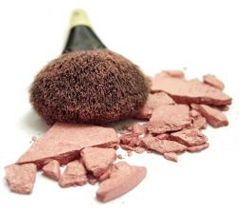
Every day I spend about ten minutes touching up my face.

Image via yenhoon on SXC

Image via yenhoon on SXC

First concealer, then blusher, eyeshadow and eyeliner, with a final buffing of finishing powder to pull everything together.

Despite my boyfriend thinking the entire exercise is unnecessary, I would rather show the world the most polished version of my face possible.

And it was on one of these mornings when I realised that make up isn’t all that different from editing.

Unless you’re into masochism webfiction, you WANT the world to see the most polished version possible of your story.

Even with webfiction, the urge to go back and fix things is there.

First you need foundation and concealer to smooth out the edges of your story and correct any plot holes. If the story’s basis is uneven, there’s no point working on anything else.

Then you need blusher, to add colour and breathe life into your story, and to make your characters have shape and definition.

Then the eyeshadow and eyeliner, the flair and drama and emotion. The best bits, shown off to their best.

Finally, the finishing powder. Blend your edits together, remove irksome typos, make the finished story seamless.

And that, my dears, is how you edit with make up.

Eleven Rules For Editing Fiction

So you’ve nailed down the 11 Rules for Writing Fiction. You’ve finished your novel. You feel good. INVINCIBLE. But then… what’s that? A typo? A cliché?!

Crap, you realise. The hard work has only just begun.

Welcome to the world of editing.

No, come back! Don’t run away screaming! Editing is fun. It’s like scrubbing off the dirt from your novel’s little face. You know how good it feels when you scrub your kitchen until all the surfaces are sparkly? That’s what editing is like.

But where do you start? Here’s some suggestions on what to look out for….

11 Rules For Editing Fiction

  1. Read critically.
    Take a break from your novel and come back to it with fresh eyes. Read it critically. Find out where things don’t work and what you need to change. Take notes.

  2. Plan.
    You don’t want to edit the story any more than you have to. Look over your notes, and if needed write a new outline. How will you better demonstrate the character’s development? Where will you plant clues about the killer’s identity? Know what needs to be changed and how, before you start rewriting.

  3. Leave line editing for last.
    The story’s basic structure comes first; leave the details for last. Focus on fixing plot holes first, on re-ordering scenes, fixing timelines–the big stuff. Don’t waste time on making a sentence sound perfect, when you don’t even know whether that scene will survive the rewrite.

  4. CUT! (aka Know When To Start)
    Get rid of that prologue. Heck, get rid of the first two chapters. Cut straight to the action–the readers don’t need long passages introducing the protagonist, the protagonist’s family and the protagonist’s collection of rocks. Neither do they need weather reports or waking-up-in-bed starts. Speaking of which…

  5. Avoid bedtimes.
    Don’t abuse waking and sleeping. If that’s how you do all your scene breaks, something’s wrong — even if your protagonist is narcoleptic. Finishing a scene with someone drifting off to sleep is often anti-climatic, starting with them waking in bed is dull, and you can only believably wake up from a nightmare so many times.

  6. Avoid cliché.
    Both in your scenes and in your language. Pay special attention to similes and metaphors–as black as night, as cold as death, a bird in the hand… To make your story sound original and fresh, get rid of anything your reader will recognise.

  7. Delete unnecessary words.
    Make your writing as tight as possible. Often-overused offenders are: seem, suddenly, just, even, really, feel, almost, slightly, and directional words (up/down/in/out). Treat adverbs with caution. Cut as many as possible.

  8. Get an outside opinion.
    Have other people read it. Develop a thick skin. Listen to all of their advice and thank them for it. Compile their feedback, and see what they all agree on.

  9. Read it aloud.
    Listen to the rhythm. Does it sound right?

  10. Love what you do.
    Don’t despair. Editing can be disheartening, but it’s not all bad. And hey, even if it is, that’s why you’re editing!

  11. Finally…
    Share your wisdom — what’s your eleventh editing rule?

Book Cover Design: Dos and Don’ts

In indie publishing, you have two choices: either you do the cover yourself, or you don’t.

Unless you are a professional graphic designer, I strongly recommend the latter. Your book cover is the your main marketing tool, second in importance only to having a solid, well-edited story — mess it up, and you’ll hurt your sales.

1. Don’t: Think you can do it alone (unless you actually can).

These are two of the rough Above Ground covers that I made over the last 3+ years.

While I’ve never used them to SELL the book, it’s clear that these covers wouldn’t help sales. I’m not an artist or even a Photoshop expert; my attempts are amateur and reflect badly on my writing.

Just because it’s indie publishing doesn’t mean it’s okay to look homemade. Your book is competing against countless other indie and trade titles. Every detail matters.

2. Do: Stick to what you’re good at.

Most of us are writers, not artists — and even those of us artistically inclined may not have the eye for design. Book covers require more than just good illustrations. There is typesetting and layout to consider; the writing should blend with the image.

Did you see those covers I made? Yep, I’m sticking to writing.

3. Don’t: Settle for anything you dislike.

If you wanted a cover image forced upon you, you should have taken the traditional route.

As an indie we’re free to get what we want (within budget and reason). A good illustrator or designer — like the lovely Jeffrey Thompson who is illustrating Above Ground — will create mock-up covers for you to choose from, will tweak things, listen to your feedback, and work with you to make you happy. With Hungry For You, I rejected the cover 8 times before MCM and I found the perfect fit.

If you settle for anything less, you’ll hate your book.

4. Do: Spend time thinking about what you really want.

I made rough sketches, and finally pitched Jeffrey with two ideas. I described the viewpoint, the surroundings, the feel of the cover, the colours… I told him about the book itself, too. The more you explain, the easier it is for them to understand where you’re coming from.

5. Don’t: Ignore market trends.

Check out bestsellers in your genre. Are there trends in the cover design? Similar fonts, colours, types of images? These are all subtle markers which readers pick up on.

Yes, you want your book cover to be original, but you ALSO want readers to roughly know what the book is about by simply glancing at the cover. With the right colours and style, you’ll lure in your target audience, and warn away any haters.

In sum: if you’re writing horror, don’t use a pink theme with fluffy cupcakes and high heels. Unless there’s lots of blood too.

6. Do: Consider your format.

If most of your sales will be ebook sales and most of your marketing will be online, your book cover needs to look good even as a thumbnail. Shrink down your book cover. Is is still appealing, legible, eye-catching? Does it still convey the book’s genre?

Keep in mind that some ereaders only have black and white displays. Does your cover have sufficient contrast; would it look okay without colour?

When it comes to print publishing, you may have to pick paper type (matt or gloss) and also decide what to put on your spine and back cover. If in doubt, look to others for inspiration; I pulled down all the print books on my shelf and studied EVERYTHING — colours, fonts, text alignment, content, layout….

7. Don’t: Break the bank.

Be realistic about how much you can afford to spend. Book covers can be expensive, and while it’s worth investing in a good cover, there’s no point in making yourself go hungry. If you can’t afford a professional, negotiate with or beg your more artistically-inclined friends for help. Alternatively, find a designer just starting out who is looking to build up their portfolio; they might be willing to handle the work for a reduced (or free) rate.

8. Do: Break the rules.

I said it right at the start of this post: I’m no expert. I’m sure some of you could break every single rule above and create an awesome book cover.

What are your dos and don’ts for book cover design?

And for those of you with book covers already, which one makes you proudest?